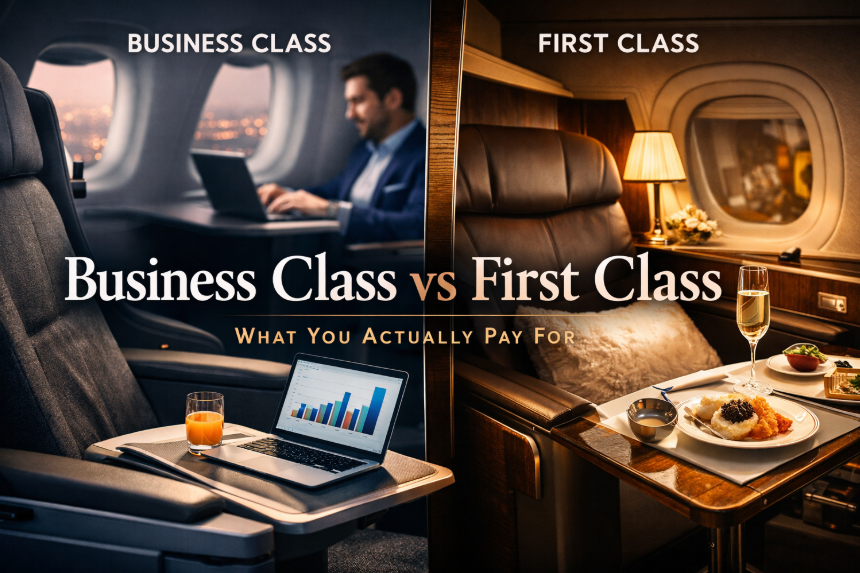
Business class vs first class is one of those travel debates that sounds simple—until you look at the bill. On paper, both cabins promise premium comfort, priority airport handling, and a better night in the sky. In reality, the difference between business class and first class pricing isn’t just “a nicer seat.” It’s a stack of tangible and psychological value drivers: more space, more privacy, more control, more attention, and sometimes—more status signaling.
Think of premium airfare like buying property. Business class is a well-designed condo with amenities. First class is a penthouse with a doorman, private elevator vibe, and the subtle feeling that the entire building is bending around your schedule. If you’re trying to decide which cabin is worth your money, your miles, or your company’s travel budget, you need a clear breakdown of what you actually pay for—line by line, benefit by benefit, and outcome by outcome.
The Real Price Gap: What Drives the Cost Difference?
Airline ticket pricing isn’t a simple cost-plus formula; it’s a revenue optimization system that treats premium cabins like a high-yield financial product.
The first class fare premium often reflects more than incremental physical upgrades because the airline is selling a different category of customer experience—one that includes privacy, exclusivity, and service intensity. In many markets, first class is also a strategic marketing asset that attracts high-value flyers, credit card partnerships, and aspirational brand demand. That’s why you may see first class fares that are 2x to 5x the business class fare, even when both cabins offer lie-flat beds and premium dining.
On niche routes or flagship routes, first class can become a prestige commodity where the airline prices for a smaller group of passengers who value privacy, recognition, and premium airport services more than the pure transportation function. In other words: business class pricing is often a market-driven productivity premium, while first class pricing is frequently a scarcity-driven luxury premium.
Seat vs Suite: The True Value of Space and Privacy
In premium aviation, the seat is not just a chair—it’s a micro-environment engineered for long-haul comfort, sleep quality, and personal space control. Business class has evolved into a highly competitive product featuring lie-flat seats, direct aisle access in many modern configurations, and improved bedding that makes long flights dramatically more tolerable. For many travelers, a lie-flat business class seat already delivers the biggest comfort leap compared to economy, especially on flights longer than eight hours.
First class, however, often changes the experience category by adding privacy architecture: suite doors, larger personal zones, better sound insulation through design, and fewer passengers competing for space and attention. This privacy advantage is not just emotional; it has functional outcomes. It can reduce social stress, minimize disturbance, and improve sleep continuity, which matters if you’re landing for a high-stakes meeting, a conference keynote, or a tight turnaround itinerary. When first class includes a fully enclosed suite, the cabin becomes more like a private office-bedroom hybrid, where your fatigue management becomes more predictable.
The real “value” of space is also about control. Business class can still feel like a shared open-plan office: it’s premium, but you can often see your neighbors, hear conversations, and feel the movement of service carts. First class reduces the friction of shared space by shrinking cabin density, increasing personal volume, and giving you the psychological benefit of separation. If business class is a great hotel room, first class is the upgraded suite with the quiet corner and the door that closes—because privacy is a performance feature, not just a luxury detail.
Ground Game: Lounges, Chauffeurs, and Priority Services
Most travelers underestimate how much premium travel value is created on the ground, not in the air. Business class typically offers priority check-in, fast-track security where available, and lounge access that can meaningfully improve pre-flight comfort. A quality business class lounge can provide reliable Wi-Fi, quiet seating, better food options than the terminal, and showers that reset your body clock before a long-haul flight. For time-sensitive travelers, business class ground benefits can reduce stress and improve travel efficiency, which is a real economic gain.
First class ground services can go further by turning airports into a curated, low-friction experience. Depending on airline and airport infrastructure, first class may include private check-in zones, escort services, premium dining spaces, private relaxation rooms, and more personalized support for connections. In some premium ecosystems, first class can offer chauffeur transfers or coordinated airport-to-plane handling that makes the journey feel less like “crowd travel” and more like “managed logistics.” That difference is hard to price until you experience it on a high-pressure travel day when lines, delays, and gate changes become the hidden cost drivers.
The critical point is that airports are often the most stressful part of air travel, and premium ground services function like an insurance policy against chaos. Business class buys you better probability of smooth processing; first class buys you a higher level of certainty and insulation. If your travel value equation includes time savings, reduced friction, and predictable comfort, the ground game can be the deciding factor—especially for international travel where immigration and long terminal walks can drain energy before the flight even begins.
Food, Wine, and Ritual: Why First Class Feels Like a Restaurant
In business class, in-flight dining has improved dramatically, especially on top-tier carriers with competitive catering, upgraded plating, and flexible service timing. You’ll often get multi-course meals, better wine than economy, and a more curated menu designed to match the premium cabin brand. For many travelers, this is “good enough” because the core objective is comfort and arrival readiness, not culinary discovery at 38,000 feet.
First class dining often targets a different emotional outcome: it aims to feel intentional, elevated, and customized. That usually shows up as dine-on-demand flexibility, more premium ingredients, more refined plating, and a service ritual that resembles high-end hospitality rather than standardized airline catering. The airline is not just feeding you; it’s performing a luxury experience that signals exclusivity. This is why first class often emphasizes signature champagne, curated wine lists, and prestige branding partnerships—because perceived luxury matters as much as taste.
The practical payoff is also timing control. In business class, service can follow a structured flow that works for the cabin but not necessarily for your sleep plan. In first class, the crew often adapts to your schedule more easily because there are fewer passengers and more service bandwidth. That matters if you want to eat quickly and sleep, or if you want to stretch the experience into a long, relaxed dinner. In premium travel, control is currency—and first class uses dining as a platform to sell control.
Service Density: What Your Ticket Buys in Human Attention
One of the most consistent differences between business class and first class is not a physical feature—it’s the ratio of crew attention per passenger. Business class service can be excellent, but it is still designed for a larger cabin, meaning each flight attendant manages more passengers, more meal logistics, and more simultaneous requests. That doesn’t mean you’ll be ignored; it means service personalization is limited by operational math. Even the best crew can’t deliver white-glove precision if they’re juggling too many needs at once.
First class is often a different service model because the cabin is smaller and the service expectations are higher. With fewer passengers, the crew can deliver more proactive service, remember preferences, anticipate timing, and maintain a calm, unhurried tone that feels like luxury hospitality. The “value” here is subtle but meaningful: you spend less time waiting, repeating requests, or negotiating for attention. If you’ve ever had to wave for water or wait for a tray pickup while trying to sleep, you already understand how service friction can ruin premium comfort.
Service quality also includes discretion and emotional intelligence—how the crew reads your signals, respects privacy, and maintains a consistent premium rhythm. In business class, the vibe can sometimes fluctuate depending on workload and route. In first class, the environment is often designed to feel stable: quieter cabin, fewer interruptions, and a higher expectation of individualized care. If your travel goal is a low-stimulation, high-recovery journey, first class service density can become a functional advantage rather than a superficial luxury.
Baggage, Amenities, and “Quiet Luxury” Extras
Premium travelers often care about the journey outcome, not just the seat experience, which is why baggage handling and amenities matter more than they seem. Business class usually includes increased baggage allowance, priority baggage tags, and sometimes better handling performance depending on the airport. This can reduce arrival friction, especially on business itineraries where time-to-hotel or time-to-meeting is part of the travel ROI. However, priority tags are not always a guarantee, and airport baggage systems vary widely in real-world effectiveness.
First class can expand this advantage with more generous baggage allowances, stronger handling priority, and sometimes separate baggage delivery channels in premium-focused airports. The economic value of faster baggage delivery is not just convenience; it reduces idle time and stress, which is especially valuable after long-haul flights. When you add premium arrival services, faster customs support in certain markets, and higher likelihood of proactive problem-solving during disruptions, first class can function like a premium operations layer.
Amenities also reflect a difference in product philosophy. Business class amenity kits can be excellent, but first class often adds premium skincare brands, pajamas, higher-quality bedding, and wellness touches that improve sleep and comfort. These extras rarely justify the entire fare difference alone, but they do contribute to the overall perception of luxury and the real comfort effect of long flights. If your goal is to arrive with less fatigue, the combination of better bedding, quieter cabin, and fewer interruptions can produce a noticeable difference in travel recovery.
Miles, Status, and Corporate Travel Policies
From an airline loyalty strategy standpoint, business class is often the sweet spot for points earning, elite status acceleration, and upgrade logic. Many frequent flyers target business class because it delivers a premium seat experience while still aligning with corporate travel approval rules and realistic redemption opportunities. Business class tickets can offer strong mileage accrual, better upgrade priority, and consistent availability across many routes, making it a practical choice for travelers optimizing long-term travel value.
First class can be more complicated in loyalty economics because it’s often more limited in availability, more expensive in miles, and sometimes restricted to specific routes or aircraft. That said, first class redemptions can deliver exceptional cents-per-point value if you secure a high-demand product at a favorable redemption rate. The challenge is that first class inventory is often managed tightly, and airlines may prefer to sell those seats for cash or offer them selectively through upgrades and elite recognition.
Corporate travel policy is another deciding constraint. Many companies allow business class for long-haul flights but restrict first class because it’s viewed as excessive, regardless of the productivity argument. If you’re navigating policy compliance, business class becomes the “approved premium” that provides comfort, flexibility, and a professional travel standard. First class can still be achievable through paid upgrades, points redemptions, or special circumstances, but the default corporate travel ecosystem is designed to normalize business class rather than first class. If you want premium travel that fits within policy and still maximizes comfort, business class often wins the ROI contest.
Who Should Buy What: Decision Framework by Traveler Type
If you travel for business, the best cabin is the one that protects your performance outcomes. Business class usually delivers the biggest productivity upgrades: lie-flat sleep, better meal quality, lounge access, and the ability to arrive functional rather than depleted. For executives, founders, and professionals with time-sensitive responsibilities, business class can be justified as a fatigue-reduction investment that increases meeting performance, decision quality, and overall travel sustainability.
First class becomes more rational when your travel stakes include extreme schedule pressure, high visibility, or a need for deep rest that business class cannot guarantee. If you’re flying overnight before a major negotiation, delivering a keynote, or doing back-to-back city hops with minimal recovery time, the additional privacy and service control can matter. Think of first class as the difference between “I can sleep” and “I can reliably sleep well.” That reliability can be worth a premium when your opportunity cost is high.
For leisure travelers, the value equation shifts from productivity to memory value and emotional payoff. Business class can turn a long-haul vacation into a smoother, more comfortable experience that starts the trip in a positive way. First class can become a milestone experience: honeymoon, anniversary, bucket-list trip, or a once-in-a-lifetime celebration where the journey is part of the story. If the flight itself is a core part of the luxury narrative, first class delivers a stronger emotional return, even if business class already meets the comfort baseline.
How to Get First Class for Less
If you want first class without first class pricing, you need to think like airline revenue management. First class seats are often allocated to a mix of paid fares, elite upgrades, operational upgrades, and reward inventory that changes over time. One strategy is using miles for first class redemptions on routes where availability is more predictable or where airlines release seats close to departure. Another strategy is buying business class and then upgrading using miles or cash offers when the airline needs to optimize premium cabin load factors.
Timing is a major lever. Airlines may offer discounted upgrade offers during online check-in, or they may release award seats when they are confident demand will not fill the cabin at full fare. Flexible travel dates and route selection can dramatically improve your odds because premium inventory is not evenly distributed. If you’re willing to route through a hub with a flagship first class product, you can sometimes unlock better redemptions and upgrade opportunities than on ultra-competitive routes.
That said, there is also a strong case for choosing business class as the smarter premium buy. On many modern aircraft, business class is effectively “first class in function,” offering direct aisle access, lie-flat beds, and strong dining. If the first class product is not a true suite experience, or if the airline’s first class ground services are limited, the incremental value may not match the price premium. A practical rule is this: if business class already provides privacy, sleep quality, and control, first class becomes an optional luxury rather than a necessary upgrade.
Conclusion
Business class vs first class is ultimately a decision about outcomes, not labels. Business class typically buys you the most meaningful comfort gains—lie-flat sleep, premium dining, lounge access, and faster airport handling—making it the best-value premium cabin for most long-haul travelers. First class, when it’s a true suite-based product with superior ground services and service density, sells something different: privacy, predictability, emotional luxury, and a level of personal attention that reduces friction across the entire journey. If your travel goal is arrival performance and consistent premium comfort, business class is often the optimal investment; if your goal is maximum privacy, maximum control, and a flagship luxury experience, first class is the upgrade you’re really paying for.
FAQs
1) Is first class always better than business class on long-haul flights?
Not always, because modern business class can match first class in sleep comfort on many aircraft. First class is “better” mainly when it adds true suite privacy, stronger ground services, and higher service density.
2) Why is first class so much more expensive than business class?
First class pricing reflects scarcity, branding, and service intensity, not just seat cost. You are often paying for fewer passengers, more space per person, and a premium experience designed to feel exclusive.
3) Which cabin is best for corporate travel ROI?
Business class usually wins corporate travel ROI because it balances comfort, productivity, policy approval, and consistent availability. First class can be difficult to justify under standard travel policies unless the stakes are unusually high.
4) When does first class become “worth it”?
First class becomes worth it when you need reliable deep rest, maximum privacy, and high-touch service, or when the trip is a milestone event where the journey itself is part of the value.
5) What’s the best way to get first class for less money?
The most practical approach is booking business class and aiming for upgrades via miles, elite benefits, or discounted last-minute offers. Flexible routes and dates increase your chances of securing premium inventory.
Read More