Why Flight-Focused Travel Apps Matter More Than Ever
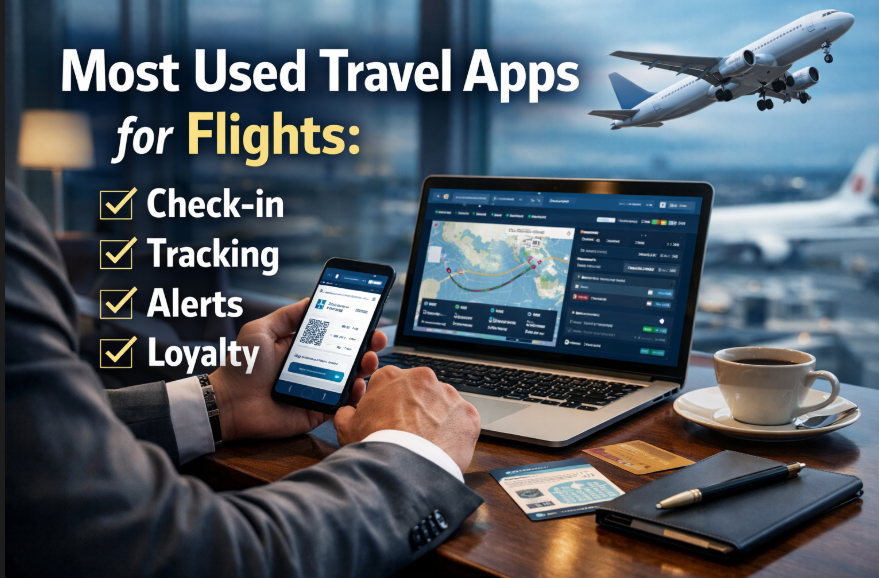
The modern flight experience is a moving target, and that reality makes flight travel apps more than convenience tools. A typical trip now includes shifting gates, dynamic boarding groups, rolling delays, and frequent schedule adjustments that can happen faster than a human can react. When your itinerary behaves like live stock prices—up one minute, down the next—an app becomes the best way to keep your plan synchronized with reality. In practical terms, the best travel apps for flights act like a cockpit dashboard: you don’t just “see” your flight, you manage it with mobile check-in, real-time tracking, smart alerts, and loyalty account access that keep every decision grounded in current information.
There’s also a commercial reason flight apps are exploding in usage: high intent. A traveler checking an airline app, a flight tracker, or a fare alert tool is not browsing casually; they’re often minutes away from a purchase, a check-in action, or a rebooking decision. That concentrated intent attracts advertisers in categories like travel insurance, premium credit cards, airport transfers, eSIM data plans, and luggage tracking devices, because the user’s need is immediate and measurable. If you want a travel workflow that feels controlled rather than chaotic, the best path is building a small “stack” of trusted apps that cover four jobs: check-in, tracking, alerts, and loyalty.
What “Most Used” Really Means (And Why It Changes by Traveler Type)
When people search for the “most used travel apps,” they often assume it’s about download rankings, but downloads alone can be misleading. A flight app can be installed once and forgotten, like a gym membership you’re proud of but never use. “Most used” is more accurately measured by behaviors such as monthly active users, retention, notification engagement, and repeat opens per trip, because these signals show that the app is part of a traveler’s routine. For flight-specific use, the most-used tools tend to be the ones that solve urgent problems repeatedly: boarding pass access, gate changes, delay explanations, boarding time reminders, and rapid rebooking options.
Traveler type also changes the definition of “best” and “most used” because different travelers optimize for different outcomes. A business traveler values predictable timing, elite status perks, and instant rebooking, while a budget traveler prioritizes fare tracking, price alerts, and flexible routing that finds cheaper options. Families often care most about coordination, document storage, and alerts that reduce surprises during connections. So, instead of hunting for one mythical “best flight app,” you’ll get better results by picking the most-used category leaders in each function: an airline app for check-in and loyalty, a flight tracker for independent visibility, a fare alert app for price monitoring, and a loyalty/points app if rewards matter.
The Core Features That Define the Best Flight Apps
A flight app succeeds when it reduces the number of decisions you must make under pressure, and that is why certain features matter more than flashy design. First, mobile check-in and a reliable digital boarding pass are non-negotiable because they remove friction at the airport. The best apps allow seamless check-in, seat selection, boarding pass storage, and updates when a boarding pass changes due to a seat swap or aircraft change. Second, real-time flight tracking is essential because it answers the questions travelers ask most: “Is my flight delayed?” “Where is my plane now?” and “Will I make the connection?” Third, high-quality push alerts convert scattered information into actionable timing, so you don’t become the person sprinting to a new gate because the announcement was too quiet.
Loyalty is the fourth pillar because it influences both cost and comfort, and many travelers underestimate how often loyalty data affects a trip. Your miles balance, status tier, upgrade eligibility, and benefit usage (like lounge access or priority boarding) change what you should do at each step. For example, a traveler with a high status tier may benefit from standby options and same-day changes, while a traveler without status should focus on early check-in timing and seat strategies. In that sense, a strong flight loyalty app experience isn’t just a points display; it’s a decision-making tool that can reduce delays, improve seating, and sometimes save money during irregular operations.
Airline Apps That Dominate Check-in and Loyalty
If your goal is check-in reliability, airline apps remain the most dependable option because they connect directly to the airline’s operational system. That matters when there are last-minute changes like seat reassignment, cabin swap, boarding group updates, or security-related identity checks. Airline apps typically provide the most accurate boarding time and boarding group information, plus the most consistent access to official documents like receipts, e-tickets, and the final boarding pass that scanners accept without hesitation. In the real world, this reliability is critical because a boarding pass isn’t just a QR code; it’s a permission slip tied to a specific record that can change after check-in, especially when aircraft assignments shift.
Airline apps also dominate the loyalty experience because they integrate your profile benefits into the trip flow. That integration shows up in practical ways: upgrade lists, priority services, baggage allowances, lounge eligibility, and partner benefits. For travelers who care about premium comfort, airline apps also tend to be the place where you manage paid upgrades, seat purchases, and add-ons like extra baggage. When advertisers target users inside or around airline-app behavior, they’re often targeting travelers who are about to spend more, which is why keywords like business class upgrades, airport lounge access, premium travel cards, and flight change protection align naturally with airline-app usage.
Airport Apps and “Terminal Intelligence” Tools
Airport apps are the underrated middle layer between your boarding pass and your gate, and they can turn a confusing terminal into a navigable system. For large hubs, terminal layouts can feel like a maze built to test your patience, and an airport app can function like a GPS for the terminal. Good airport apps provide maps, gate directions, estimated walking times, live parking updates, security wait times where available, and listings for lounges, dining, and services. That “terminal intelligence” matters because your time budget in an airport is not just about minutes; it’s about decision quality. If you know the walking time to your gate and the current security congestion, you can choose whether to eat, shop, work, or move immediately.
These tools are especially valuable during connections, when every minute has a cost and uncertainty multiplies. A traveler with a tight connection benefits from a quick answer to, “How far is my next gate, and do I need to change terminals?” Airport apps can also help when you land at a new gate, because what you need next might be baggage claim, ground transportation, or an international transfer checkpoint. From an SEO and advertiser perspective, airport apps sit near high-value purchase points like airport parking, lounge memberships, fast-track security, airport transfers, and travel eSIM plans, because travelers in terminals tend to make urgent, location-based decisions.
Flight Tracking Apps Travelers Open Every Trip
Independent flight tracking apps are popular because they act like a second opinion, and that matters when timing is uncertain. Airline notifications sometimes prioritize formal updates, and those updates can lag behind operational realities. Flight tracking apps often surface signals like inbound aircraft status, taxi time, and historical delay patterns that can give earlier warning about disruption. This “early visibility” is the difference between calmly rebooking with options versus reacting when seats are already gone. If an app helps you see that your plane hasn’t departed from its previous city, you can anticipate a delay before it becomes official, which makes you more strategic and less stressed.
The best tracking apps also provide context that turns raw status into an explanation you can use. Instead of simply saying “delayed,” they may indicate weather, air traffic control, late inbound aircraft, or operational constraints. That explanation matters because it influences your next move: weather delays might persist across multiple flights, while a late inbound aircraft might stabilize quickly once the plane arrives. Tracking apps also help with arrivals by giving better ETA estimates and sometimes providing baggage belt guidance or airport location information via integrations. In SEO terms, tracking apps connect strongly with keywords like real-time flight status, gate change alerts, delay notifications, and arrival tracking, which also aligns with advertiser categories like travel insurance, airport pickups, and premium luggage services.
Price Alerts, Fare Tracking, and Booking Watchlists
Fare tracking apps are used heavily because flight pricing behaves like a living organism, not a fixed price tag. Prices shift based on demand, seasonality, seat inventory, and airline strategy, which makes price alerts one of the most effective tools for budget control. A fare alert app is basically a financial instrument for travelers: you set parameters—dates, routes, flexibility—and the app watches the market for you. This matters because the human brain is not built to monitor price volatility daily, and doing it manually leads to decision fatigue. With watchlists, you can react when the price hits a threshold that makes sense, rather than buying out of fear or delaying until it gets worse.
From an advertiser’s viewpoint, this category is pure gold because it captures travelers during a purchase window. Someone receiving an alert that “prices dropped” is extremely likely to book, compare, or upgrade, which creates a strong conversion moment for ads related to flight booking, hotel packages, travel cards, VPN travel deals, and trip protection insurance. To maximize value, travelers should treat fare alerts like a strategy rather than a notification game: set multiple date ranges, track nearby airports, and monitor both one-way and round-trip options. This approach turns fare volatility into an advantage, and it supports SEO phrases like cheap flight alerts, best time to book flights, and flight deal tracking.
Loyalty and Credit Card Companion Apps
If airline apps are the front door of loyalty, credit card and points apps are often the hidden engine room. Many frequent travelers earn more value from transferable bank points than from a single airline’s miles, especially when points can move between partners. Credit card apps and loyalty aggregators help you track balances, bonus categories, statement credits, and redemption history, which is essential if you want to treat travel rewards like an investment rather than a hobby. When you understand what you’re earning and where you can transfer, you start making flight choices based not just on price, but on total return: points earned, elite benefit value, and redemption potential.
These apps also reduce the silent losses that happen through expiration, missed bonuses, or unclaimed benefits. An alert that your points are expiring, or that you have a travel credit available, can translate into real money saved. For SEO, this space is packed with advertiser-friendly keywords like best travel credit card, airport lounge credit card, points transfer partners, and miles redemption. Practically, the best workflow is to connect loyalty and card tracking with your flight planning: check reward options before buying, monitor bonus periods, and align purchases with category multipliers. That’s how loyalty becomes a measurable advantage rather than a confusing scoreboard.
One “Stack” to Rule Your Trip (Best App Combos by Scenario)
The smartest travelers don’t rely on one app; they build a small app stack that covers the entire journey. For business travelers, the best stack typically includes the airline app for check-in and elite benefits, a strong flight tracker for early disruption signals, and a calendar or itinerary manager that centralizes documents. The goal is time certainty and fast recovery when something breaks, because missed meetings cost more than a slightly higher fare. Business travelers also benefit from apps that integrate with lounge access programs and ground transportation because those remove small frictions that compound into stress.
Budget travelers tend to build a different stack: a fare alert app to monitor pricing, a flexible booking tool to compare routes, and a tracker to avoid surprises. The strategy is to capture the best deal without sacrificing reliability, so tracking and alerts matter just as much as the fare itself. Families and group travelers should prioritize coordination: shared itineraries, document storage, and alerts that keep everyone aligned. In group travel, the biggest enemy isn’t the delay; it’s miscommunication, and the right stack keeps the whole group in the same information loop.
Privacy, Permissions, and Security for Travel Apps
Flight apps often request sensitive permissions because travel is inherently identity-based, and that makes privacy a real concern, not an abstract one. Depending on the app, data collection may include location, device identifiers, email scanning for itineraries, and behavioral analytics that track how you interact with prices or notifications. This is not automatically bad—many features require data to work—but it should be intentional. If you treat permissions like giving someone keys to your house, you’ll be more selective about what you allow. For example, location permission might be useful for airport guidance, but it may be unnecessary for a fare tracker.
A practical privacy strategy is to minimize permissions while keeping core functionality. Use strong passwords, enable two-factor authentication for airline accounts, and review notification settings so you only receive high-value alerts. Consider using email aliasing or filtering if you rely on itinerary import features, and avoid connecting apps that don’t have a clear privacy posture. Security also includes financial protection: if an app stores payment methods or loyalty profiles, it becomes a higher-risk target. A secure setup reduces the chance of account takeover, protects your miles, and prevents fraud during travel when you’re least able to respond quickly.
A Simple Checklist to Choose Your Best Flight Apps
Choosing the right flight apps becomes easier when you turn it into a checklist rather than an emotional decision based on popularity. Start with reliability: does the app work consistently during peak travel days, and can it show essentials like boarding passes even when connectivity is weak? Next, evaluate clarity: does it present information in a way that helps you act, or does it drown you in noise? Then consider integration: can it connect to your calendar, wallet, email, or loyalty program without friction? Finally, assess value: does it genuinely reduce stress, save money, or improve comfort?
A quick evaluation matrix helps. Must-haves include mobile check-in support, stable boarding pass access, accurate status updates, and customizable alerts. Nice-to-haves might include airport maps, lounge discovery, baggage tracking integrations, or advanced delay predictions. When your app stack is chosen with intention, your trip stops feeling like a series of surprises and starts feeling like a managed process. And that’s the real win: less uncertainty, fewer rushed decisions, and more control over time and cost.
Conclusion
The most used travel apps for flights are popular for one reason: they reduce uncertainty at the exact moments travelers feel it most. When you combine an airline app for check-in and loyalty, a tracking app for real-time flight status, an alert tool for smart notifications, and a fare app for price monitoring, you create a travel system that is proactive instead of reactive. The airport becomes less like a storm you endure and more like a route you navigate—step by step, with information you can trust. Build the right stack once, refine it over a few trips, and you’ll feel the difference every time you fly.
FAQs
1) What is the best app for mobile check-in and boarding passes?
The airline’s official app is usually the most reliable for mobile check-in and updated boarding passes because it connects directly to your reservation record.
2) Why use a flight tracking app if the airline already sends notifications?
A flight tracker can provide earlier signals and extra context like inbound aircraft status, which helps you anticipate delays and rebook faster.
3) Which apps are best for flight price alerts and deal tracking?
Fare tracking apps that support watchlists and flexible date alerts are best, because they help you react to price drops and avoid overpaying.
4) How do loyalty and credit card apps help with flights?
They help you track points, bonuses, and transfer options, so you can reduce costs and upgrade strategically using rewards.
5) Are travel apps safe to use with personal and payment data?
They can be safe if you use strong passwords, enable two-factor authentication, limit permissions, and only use reputable apps with clear privacy controls.
Read More