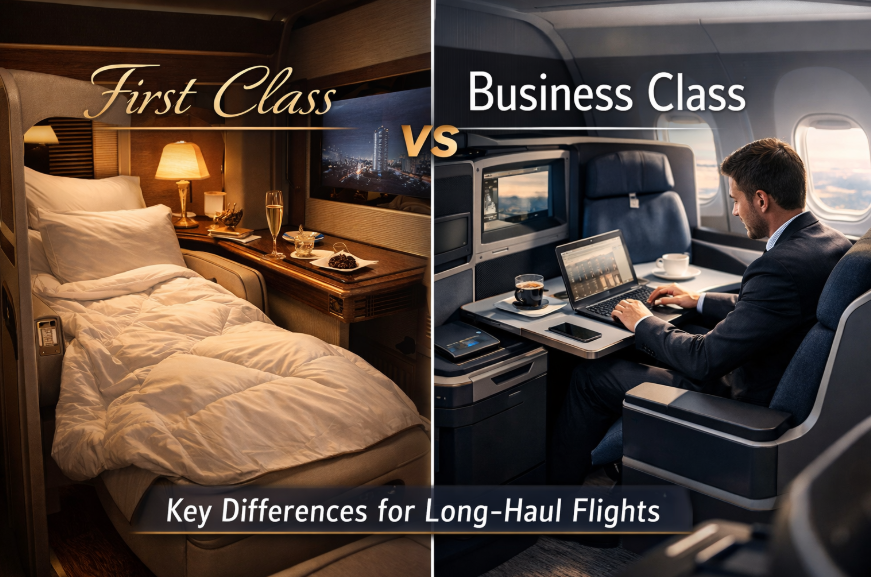
Long-haul flights have a special talent for revealing the truth. A short flight can hide a mediocre seat, a rushed meal, or a noisy cabin. But stretch that journey to 10, 12, or 16 hours, and every detail becomes louder—like a tiny pebble in your shoe that suddenly feels like a rock. That’s why first class vs business class isn’t just a curious comparison; it’s a genuine premium travel decision that can impact your sleep, your productivity, your mood, and even how your body feels when you land.
If you’ve ever stared at a booking page and wondered whether business class is “good enough” or if first class is the real long-haul cheat code, you’re not alone. The marketing is glossy, the photos are dramatic, and the price gap can be… intense. However, the key differences are surprisingly simple when you break them down: space, privacy, service intensity, dining luxury, and the overall VIP travel experience. The rest is about whether those upgrades matter to you on your route, with your budget, and for your travel goals.
Why This Comparison Matters for Long-Haul Travelers
A long-haul flight is basically a mini-life inside a metal tube. You eat, you work, you try to sleep, you recharge devices, you manage stress, and you attempt to arrive looking like you didn’t just time-travel across continents. That’s why choosing between first class and business class is less about “status” and more about comfort ROI—the return on investment you feel in your back, your neck, your energy, and your schedule.
In narrative terms, think of business class as a high-end hotel room in a busy city: comfortable, efficient, designed for travelers who want quality and function. Meanwhile, first class is a private villa experience: more space, deeper privacy, and a level of service that feels like the staff is quietly reading your mind. On a long-haul route, these differences can change everything, especially if you’re chasing better sleep, lower jet lag, and a premium airport-to-arrival experience.
Comfort vs Cost: The Real Trade-Off
Business class often delivers the best overall value for premium travelers because lie-flat seats, priority services, and upgraded meals already handle the biggest pain points of economy travel. Yet first class goes further by turning “comfortable” into “pampered,” and “private” into “secluded.” The question becomes: do you want a strong upgrade, or do you want a complete transformation of how flying feels?
Who Typically Chooses Each Cabin
Business class is the classic pick for corporate travelers, frequent flyers, and anyone who wants a reliable premium cabin without the most extreme ticket price. First class is usually chosen by travelers who want maximum privacy, special-occasion luxury, or an ultra-premium experience that begins at check-in and continues beyond landing.
Seat & Bed Experience: The Biggest Difference You’ll Feel
The moment you sit down is where the difference between first class vs business class on long-haul flights becomes physical. A premium seat isn’t just furniture; it’s your office, your dining chair, your lounge, and your bed. When the flight is long enough, your seat becomes your world, and that’s why seat design is the most important factor for premium cabin value.
In most modern airlines, business class offers a lie-flat seat, and that already feels like a major upgrade from economy or premium economy. However, first class tends to deliver something closer to a private sleeping space—often with a suite door, more surface space, better bedding, and a layout that feels less like “seat that becomes a bed” and more like “bed that happens to fly.”
Business Class Lie-Flat Basics
Business class usually means a fully flat bed, but not all lie-flats are created equal. Some business cabins are arranged in a way that prioritizes density, and that can reduce privacy or create awkward angles. Better business class products feature direct aisle access, privacy shells, and smart storage, which are huge for long-haul comfort.
If you’re planning an overnight flight, the business class bed experience will often be “good enough” to sleep properly—especially with a mattress pad and decent bedding. Still, if you’re a light sleeper, the cabin traffic, nearby conversations, and bright galley areas may reduce sleep quality. Business class can feel like sleeping in a premium room with thin walls: comfortable, but not fully isolated.
First Class Suites and Fully Private Spaces
First class is where the seat becomes a space. On many airlines, first class includes an enclosed suite with a door, more width, more storage, and a stronger sense of personal territory. That privacy changes your psychology in a subtle way—you stop feeling like a passenger in a shared cabin and start feeling like a guest in a private room.
Some first class cabins offer separate beds, expanded ottomans, or layouts that allow you to sleep without feeling “folded.” Even when business class is lie-flat, first class often delivers a more natural sleeping posture, better bedding, and fewer interruptions—making it ideal for travelers who treat sleep as a serious travel asset.
Privacy, Space, and Cabin Atmosphere
On a long-haul flight, privacy isn’t just about avoiding small talk. Privacy is about lowering your stress level so your nervous system can actually relax. The difference between business class and first class often feels like the difference between being in a quiet premium lounge versus being in a private meeting room where you can breathe deeply and fully disconnect.
Cabin atmosphere also matters for travelers who work, who travel with a partner, or who simply want a calm luxury experience. Even if business class is excellent, first class typically has fewer passengers, meaning fewer noises, fewer footsteps, and fewer “public moments” when you’d rather be invisible.
Cabin Size and Passenger Density
Business class cabins can be large, sometimes with many rows, and that creates movement. People walk to the restroom, crew members work the aisles, and the cabin can feel active. It’s premium, but it’s still communal. For some travelers, that’s totally fine, because business class already provides comfort and service.
First class cabins are usually smaller, and that smaller footprint creates calm. It feels like a boutique experience, not a premium crowd. On overnight routes, this “quiet factor” can become the hidden difference that makes first class feel dramatically better for deep sleep and mental recovery.
Storage, Surfaces, and Personal Space
Business class usually offers adequate storage, but first class often offers abundant storage and surfaces—places to put your laptop, your phone, your drink, your skincare, your headphones, and still have room left. That matters because clutter creates stress. In first class, you can keep your space tidy without effort, which feels surprisingly luxurious when you’ve been traveling all day.
Service Level: Crew Attention and Personalization
Service is where the premium cabin experience becomes emotional. You can forgive a small screen if the crew is wonderful, and you can feel disappointed even with a beautiful seat if service feels cold. In business class, service is usually polished and professional. In first class, service often becomes personal and proactive, like a high-end restaurant where the staff remembers your preferences before you even ask.
For long-haul flights, service style affects your comfort in practical ways: how quickly you get what you need, how smoothly your meal timing works, and how supported you feel when you want to rest.
Business Class Service Standards
Business class service is usually designed for efficiency. The crew is attentive, but they are also managing a larger cabin. You typically get a welcome drink, a solid meal service, and professional support throughout the flight. The best airlines make business class feel like a premium hospitality product rather than a simple seat upgrade.
However, business class service can sometimes feel structured, like a schedule. Meals arrive at set times, lights shift according to cabin rules, and interactions can be shorter. It’s still a premium experience, but it’s not always deeply customized.
First Class Hospitality
First class service often feels more like luxury hotel service. The crew-to-passenger ratio is usually lower, which allows more attention to detail. You might get your meal exactly when you want it, your bed made proactively, and your preferences remembered without repeating them.
On a long-haul flight, that level of personalization can feel like a travel superpower. It reduces friction. It turns the flight into a smooth experience rather than a sequence of service steps.
Dining & Drinks: Restaurant-in-the-Sky vs Premium Meal Service
Food is not just food on long-haul flights—it’s a milestone that breaks time into manageable pieces. A good meal makes the flight feel shorter, and a great dining experience makes the flight feel intentional, like part of the journey rather than a hurdle to survive.
Business class dining has improved dramatically in recent years. However, first class dining still tends to push the experience further, especially in presentation, ingredient quality, and beverage programs.
Business Class Menus and Premium Beverage Programs
In business class, you typically get multi-course meals with improved plating, premium wine selections, and better snack availability than economy. Many airlines offer dine-on-demand options in business class now, especially on top-tier carriers, which helps you time meals around sleep.
Still, business class meals can vary. Some are excellent, while others feel like “upgraded airplane food.” If you’re a traveler who values culinary experience, you’ll notice that business class often aims for high quality at scale.
First Class Fine Dining
First class dining is where the “restaurant in the sky” idea becomes real. You often get higher-end ingredients, more course flexibility, and a presentation that feels curated. Signature items like premium champagne or caviar service show up in many first class cabins, depending on the airline and route.
What really changes is control. In first class, dining can feel like it follows your rhythm. You can eat slowly, pause, resume, or snack later, without feeling like you’re disrupting a process. That freedom becomes luxurious on a long-haul flight.
Sleep Quality and Jet Lag Recovery
Jet lag is the tax you pay for crossing time zones. The best way to reduce that tax is sleep, and the best way to sleep on a plane is to control your environment—light, noise, temperature, and comfort.
Business class helps significantly by giving you a lie-flat bed. First class often adds deeper privacy and better bedding, which can turn “some sleep” into “real sleep.”
Bedding, Temperature, and Noise Control
Business class bedding usually includes a blanket and pillow, sometimes with a mattress topper on better airlines. That’s often enough for decent rest. But if you wake easily, the cabin noise and movement can still disrupt you.
First class typically offers thicker bedding, better pillows, and often pajamas. Those details matter because they create a sleep ritual, and rituals tell your body it’s time to rest—even at 35,000 feet.
Arrival Readiness
If you’re landing for a business meeting or a special event, first class sleep advantages can feel priceless. Being able to arrive refreshed can save you from losing a day to fatigue, which is a hidden value that travelers often underestimate.
Lounge Access Before the Flight
The premium travel experience begins long before boarding. Lounges are where you transition from airport chaos into calm. Business class lounges are often strong and functional. First class lounges can feel like destination experiences of their own.
Business Class Lounges
Business class lounges typically offer food, drinks, Wi-Fi, workspaces, and showers at major hubs. That’s already a huge benefit for long-haul travelers because it lets you reset before the flight.
A good lounge can make your whole travel day feel smoother. You can eat properly, hydrate, charge devices, and avoid noisy gates. For many travelers, this is where business class value becomes obvious.
First Class Lounges and Private Suites
First class lounges often elevate everything: better dining, more privacy, higher-end service, and sometimes spa options. In some airports, first class travelers may get private rooms or dedicated areas that feel like a luxury terminal inside a terminal.
If business class lounges feel like premium coworking spaces, first class lounges can feel like boutique hotels. For travelers who value a seamless luxury journey, this difference is meaningful.
Ground Services: Check-In, Security, and Boarding
Airport stress can drain you before you even sit down. Premium ground services reduce friction—priority check-in, fast track security, and earlier boarding. Business class usually provides strong benefits here, but first class can add a VIP layer that feels like traveling with a backstage pass.
Priority Everything in Business
Business class generally includes priority check-in counters, priority baggage, and priority boarding. On busy travel days, these perks can save real time, and time is a premium travel currency.
Fast track security lines are especially valuable on long-haul routes, because missing a long-haul flight is an expensive nightmare. Business class helps reduce that risk with smoother airport flow.
First Class VIP Treatment
First class can include private check-in areas, escorts, or premium handling that minimizes your time in public queues. Not every airline does this everywhere, but when it’s available, it changes your airport experience dramatically.
It’s the difference between “I got through faster” and “I barely noticed the airport.” That’s luxury.
Baggage Allowance and Travel Convenience
Baggage is a travel detail that becomes important when you pack for long trips, business events, or multi-city itineraries. Both business and first class usually offer larger baggage allowances than economy, but first class can provide even more.
Business Class Baggage Benefits
Business class generally includes extra checked baggage and priority handling. This makes business travel more convenient, especially when you’re carrying formal clothing, equipment, or gifts.
Priority tags can also reduce stress on arrival, because your bags often come earlier. That means less waiting, less worry, and a smoother transition to your destination.
First Class Extras
First class sometimes includes higher weight allowances or additional pieces. For travelers on long international trips, that flexibility can reduce excess baggage fees and simplify packing choices.
When you don’t have to negotiate with your suitcase, travel feels lighter.
In-Flight Entertainment and Connectivity
Entertainment and connectivity matter more than people admit. A long-haul flight can be productive or painfully slow depending on your screen quality, content selection, and Wi-Fi reliability.
Screens, Headphones, and Content
Business class usually offers large screens, quality headphones, and strong content libraries. It’s a premium setup designed to keep travelers comfortable and engaged.
First class often improves the details—better headphones, more privacy for viewing, and sometimes a more premium interface. However, this category often depends more on airline quality than cabin class.
Wi-Fi Packages and Productivity
Business travelers care about Wi-Fi because productivity equals value. Business class often offers paid Wi-Fi, sometimes discounted or included depending on airline programs.
First class may include better Wi-Fi access or more complimentary packages. On a long-haul flight, having reliable connectivity can turn the cabin into a flying office—if the airline delivers.
Amenities & Luxury Touches
Amenities are the small things that make the experience feel considered. A quality amenity kit, good skincare, and comfortable sleepwear can improve how you feel mid-flight and after landing.
Business Class Amenity Kits
Business class amenity kits usually include basics like eye masks, socks, toothbrush kits, and skincare items. They’re functional and often branded, which adds a premium feel.
On long-haul flights, these small comforts can matter, especially when you want to freshen up before landing. Business class is generally sufficient for most travelers.
First Class Signature Amenities
First class amenity kits can feel like luxury gifts. Designer collaborations, higher-end skincare, and better comfort items are common in top first class cabins.
Pajamas in first class are more than clothing—they’re a psychological switch. When you change into sleepwear, your body believes it’s bedtime, and that can improve sleep quality.
Price, Points, and Upgrade Strategy
Price is where the debate gets real. The gap between business and first class can be small on some routes, and shockingly large on others. That’s why smart travelers often use points, miles, upgrade bids, and airline promotions to maximize premium cabin value.
Cash Pricing Reality
Business class pricing depends on route demand, seasonality, and airline competition. On highly competitive routes, business class deals can appear, making premium travel more accessible.
First class tickets are often priced as ultra-luxury products, and that can mean steep costs. Sometimes the experience justifies the price, but other times the value is better in business class.
Miles, Points, and Sweet Spots
Many travelers aim to book business class with points because availability is often better than first class. First class award seats can be rare, restricted, or limited to certain loyalty programs.
Upgrade strategies can also help. Sometimes buying premium economy and upgrading to business class provides strong value, especially when business class is your main goal for long-haul comfort.
Which One Should You Choose for Your Next Long-Haul Flight
Choosing between business and first class is like choosing between a luxury sedan and a private chauffeur service. Both are premium. Both can be excellent. But the feeling is different, and that feeling is what you’re paying for.
Best for Business Travelers
Business class is often the best choice for business travelers because it offers the key performance features: lie-flat sleep, decent privacy, strong service, and productivity support.
If your priority is arriving capable, clear-headed, and ready to work, business class usually delivers the best premium travel ROI.
Best for Leisure, Honeymoon, and VIP Moments
First class shines when the journey is part of the celebration. For honeymooners, VIP travelers, or anyone seeking a “once in a lifetime” flight, first class delivers emotional value that business class might not.
If you want maximum privacy, maximum service, and a true luxury travel story, first class is the experience cabin.
Conclusion
In the end, first class vs business class for long-haul flights is a decision about how you want to feel while traveling. Business class is the premium workhorse—reliable, comfortable, and often the smartest value for lie-flat sleep and priority travel benefits. First class is the luxury statement—more private, more personalized, and designed to make flying feel like a curated experience rather than transportation. If you want the best balance of cost and comfort, business class is often the winner; if you want the most exclusive luxury journey and the deepest rest, first class delivers a different league of premium travel.
FAQs
1) Is first class always better than business class on long-haul flights?
Not always, because some airlines have business class suites that rival older first class cabins, so the “better” choice depends on the specific airline and aircraft.
2) Is business class worth it for long-haul flights?
Yes, because lie-flat seats, premium service, and airport priority benefits can dramatically improve comfort, sleep, and arrival energy.
3) Why is first class so much more expensive than business class?
First class is priced as an ultra-premium product with fewer seats, more space, higher crew attention, and often exclusive ground services and luxury dining.
4) Can I upgrade from business class to first class with points?
Sometimes, but it depends on airline policies and award availability, because many airlines limit first class upgrades and seats.
5) Which is better for jet lag: first class or business class?
First class is often better for jet lag because improved privacy, bedding, and lower cabin disturbance can increase deep sleep quality.
Read More